
“Mass” shooting
Some reflections on today’s shootings in Minneapolis
As I write this, the information I have is that an eight-year-old and a 10 year-old were murdered as they sat in a required mass at their Catholic school this morning. The third person who is dead, killed the two children.
All of the grief counselors, pastors and priests, eloquent speakers and writers in the world cannot assuage the grief the parents and other loved ones of these children feel and will feel for the rest of their lives. Nor is there any possible way to make up to these victims the life stolen from them.
In our justifiable rage at the people and circumstances involved in making this atrocity a now-current event, we must not forget that any of us who are reacting to the news, whether we are close to the affected people or not, have only minuscule roles to play in what is happening now and what happens from here on out. In the sense that what befalls any member of the human family impacts the rest of us, yes we are involved, but all of the insights, announcements and conversations and explanations about the tragedy—regardless of how creative or poignant or insightful—are of practically no consequence in comparison to the reality of life stolen from an eight year-old child and a 10-year-old child.
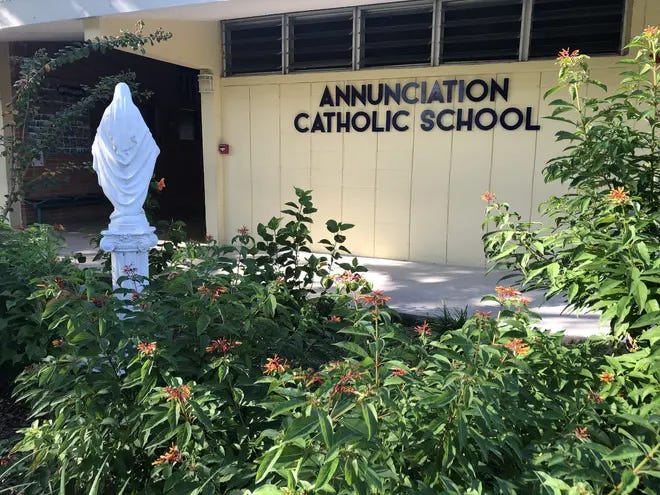
Having established, then, that what I think or feel about what happened there today is of extremely limited consequence, I, nonetheless, want to share a few thoughts in honor of those children and their families keenly aware that the focus should not be on what I have to say but on them.
I learned in my earliest studies of biblical Greek that the present tense in that language did not connote punctiliar actions of people or events or circumstances. Present-tense verbs would never have been used for describing actions that were frozen in time. To have said, for example, “I love you,“ present tense utilized, would have suggested, using English of course to explain: I am loving you. I love you at this moment, and I keep on loving you.
“Thoughts and prayers” has become the favorite phrase to use in the United States to feign concern about another person‘s tragedy.
I bring that up because it helps picture the fact that the effects of death, whether through tragedy as in today’s case or through natural causes, are ongoing. They are not forgotten tomorrow or the next day because of a new news cycle. For those closest to the children who were killed—their parents, their grandparents, their siblings, their teachers, their school administrators, their friends—tragedy was set in motion that will ripple as part of reality as far out into the future as anyone can now see and maybe into eternity. It cannot be erased, even if it is forgotten. It cannot be erased, even if it is ignored.
Was that in mind, we first cannot allow them to be anonymous events. As far as I know now the names of the children have not been made known to the public, and that is respectful. But once we know their names, we will call their names when we discuss their deaths. They can never be “the children who were shot at mass in Minnesota.”
Though many rationalizations will be offered, and some are already circulating, these deaths are not subject to rationalization. They remain entirely senseless. They create a dissonance in the minds of those trying to understand or discuss, a dissonance that can never be resolved. No matter how long we ponder them, they will never make sense.
“Thoughts and prayers” has become the favorite phrase to use in the United States to feign concern about another person‘s tragedy. Politicians in particular favor it. It requires no energy to utter, and no one will know if the person using the phrase will ever follow through. Most likely they will not. Most likely people who would use this phrase will not give the tragic situation about which they are commenting another thought, and they do not have the capacity to pray. Therefore, what “thoughts and prayers“ actually means is “no thoughts, no prayers.” It means, “I acknowledge your loss in the most insincere and uninvolved way permitted by language.”
The vast majority of murderers presently and throughout history are/were heterosexuals.
I was emotionally applauding with gusto what Mayor Frey of Minneapolis said to the press only a few hours after the precious children were killed. I paraphrase: “Don’t cheapen, don’t pollute, don’t desecrate what has happened with your pseudo-psychological bullshit. None of us wants to hear anything about your thoughts and prayers if that’s what you have to say. If prayer could’ve made a difference then the kids wouldn’t be dead because they were literally praying during the mass when the madman killed them.” Mr. Mayor, no one has ever given a better response to those empty words.
Much has already been made of the fact that the killer was a transsexual. And much much much more will be made of it. That is unfortunate as well as inevitable, and I say unfortunate because being transsexual had absolutely nothing to do with why he killed the children. The vast majority of murderers presently and throughout history are/were heterosexuals.
This is definitely one of those moments when, even if I were or could be a brilliant writer or speaker, the insights of the apostle Paul make more sense than anything else related to response. He believed the most honest, sincere, focused prayers anyone can pray cannot be prayed with words. Those prayers that are the most authentic transcend the capacity of words; they are our deepest groans, reflecting our deepest feelings. Furthermore, the most authentic prayers are unavoidable. We pray them in communion with God because we cannot help ourselves. There are those moments when silence—not from numbness or callousness but rather—from reverence is demanded and deserved.